

Arthrosamid Injection
What is Arthrosamid®?
Arthrosamid® is an innovative, non-biodegradable hydrogel injection used to treat knee osteoarthritis. Composed of 2.5% cross-linked polyacrylamide and 97.5% water, it acts as a permanent, biocompatible implant. Once injected, it physically integrates with the knee’s synovial tissue to thicken joint fluid, improve lubrication, and provide long-lasting cushioning.
What Is Arthrosamid® Made Of? Arthrosamid® Composition Explained
Arthrosamid® is composed of:
- 97.5% sterile water
- 2.5% cross-linked polyacrylamide
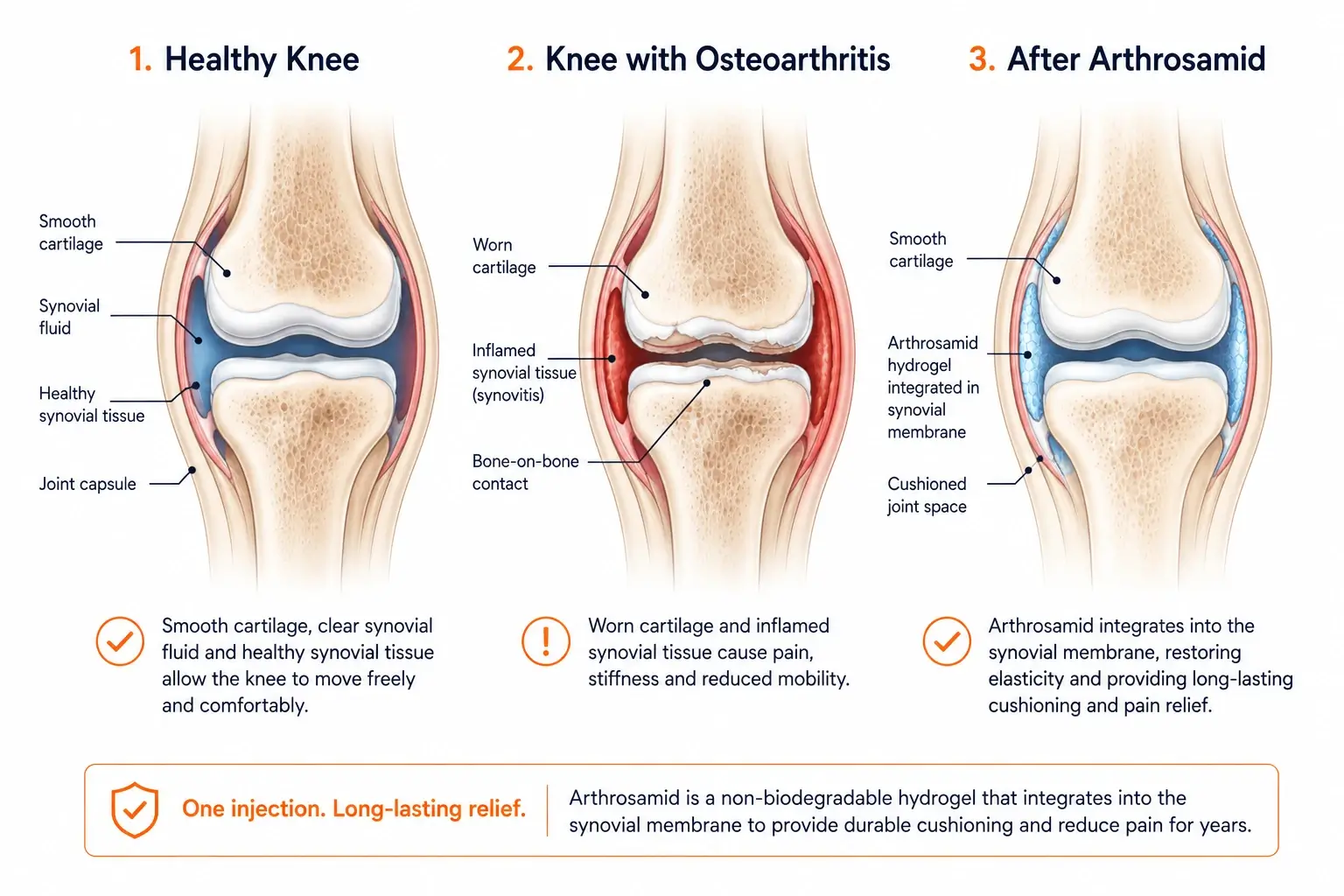
It does not contain corticosteroids or hyaluronic acid. The polyacrylamide forms a stable three-dimensional hydrogel structure that is non-biodegradable and biocompatible. After being injected into the knee, the hydrogel becomes integrated into the synovial tissue rather than being gradually absorbed like a temporary injectable lubricant.
The recommended treatment dose is 6 mL. Because the material is non-absorbable, Arthrosamid® is considered a permanent synovial implant, although the duration and degree of symptom improvement vary from patient to patient.
Is Arthrosamid® available in Canada?
Yes. Health Canada officially approved Arthrosamid® in 2024 for the treatment of knee osteoarthritis. It is currently available across North America at specialized sports medicine and orthopedic pain clinics.
Do Arthrosamid® injections work?
Yes. Extensive clinical trials and over 20 years of polyacrylamide research show that Arthrosamid® provides significant, sustained pain relief. By chemically binding to the synovial membrane, it alters the joint environment to reduce friction, lower inflammation, and physically cushion the joint without surgery.
What is the success rate of Arthrosamid®?
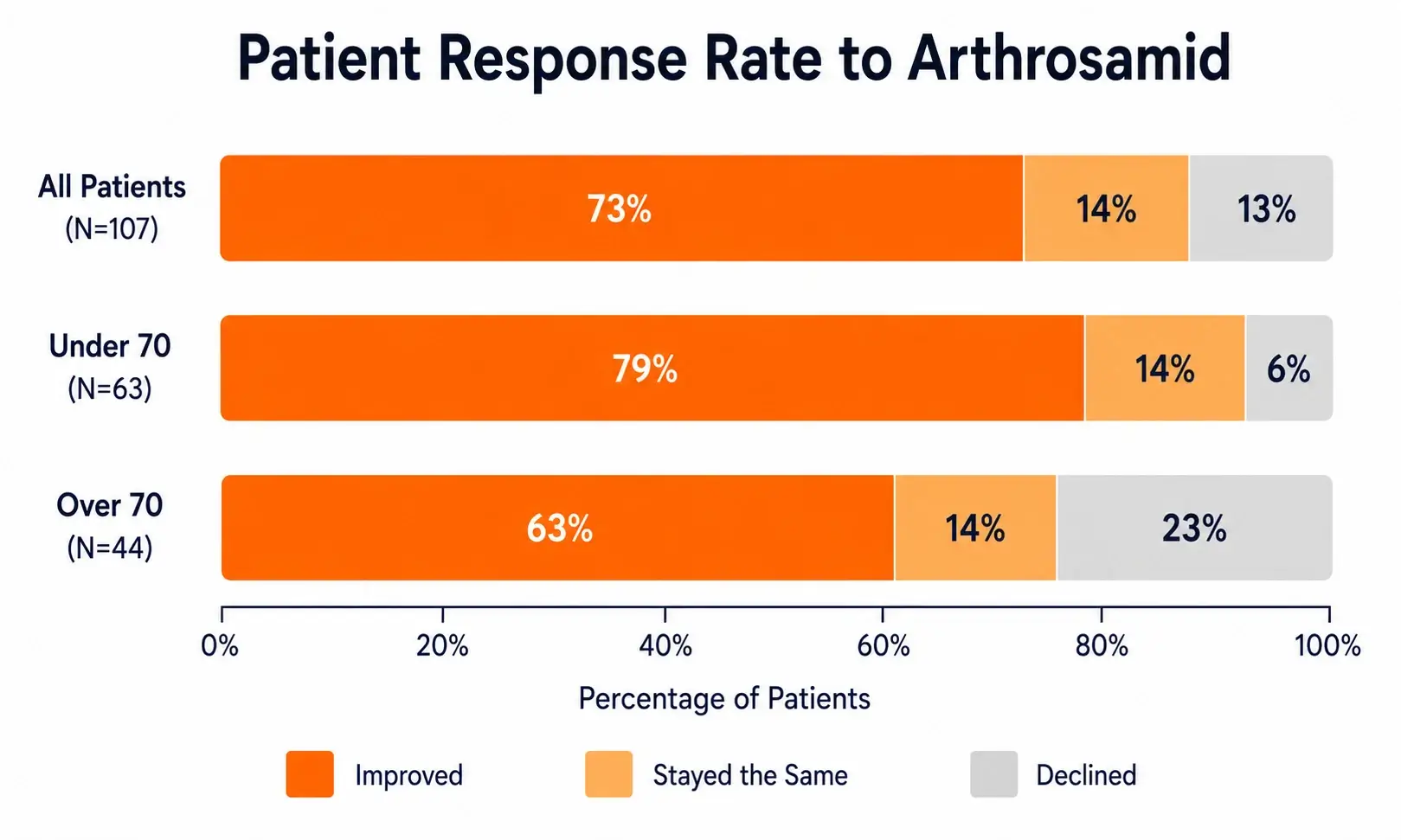
- Under 70 years old: Approximately an 80% positive response rate.
- Over 70 years old: Approximately a 60% positive response rate.
- Long-term outcomes: In observational studies, over 56% of patients avoided knee replacement surgery 10 years after receiving the injection.
What are the indications for Arthrosamid® injections?
Arthrosamid® is indicated for the symptomatic treatment of adults suffering from moderate to severe knee osteoarthritis. It is ideal for patients who want to avoid or delay joint replacement surgery, or those who have stopped finding relief from traditional short-acting injections.
What are the contraindications for Arthrosamid® injections?
Arthrosamid® should not be administered to patients with:
- Active infections in the knee joint or skin infections at the injection site.
- Known hypersensitivity or allergies to polyacrylamide hydrogels.
- Recent knee surgeries (typically requires clearance from a physician).
How is an Arthrosamid® injection performed?
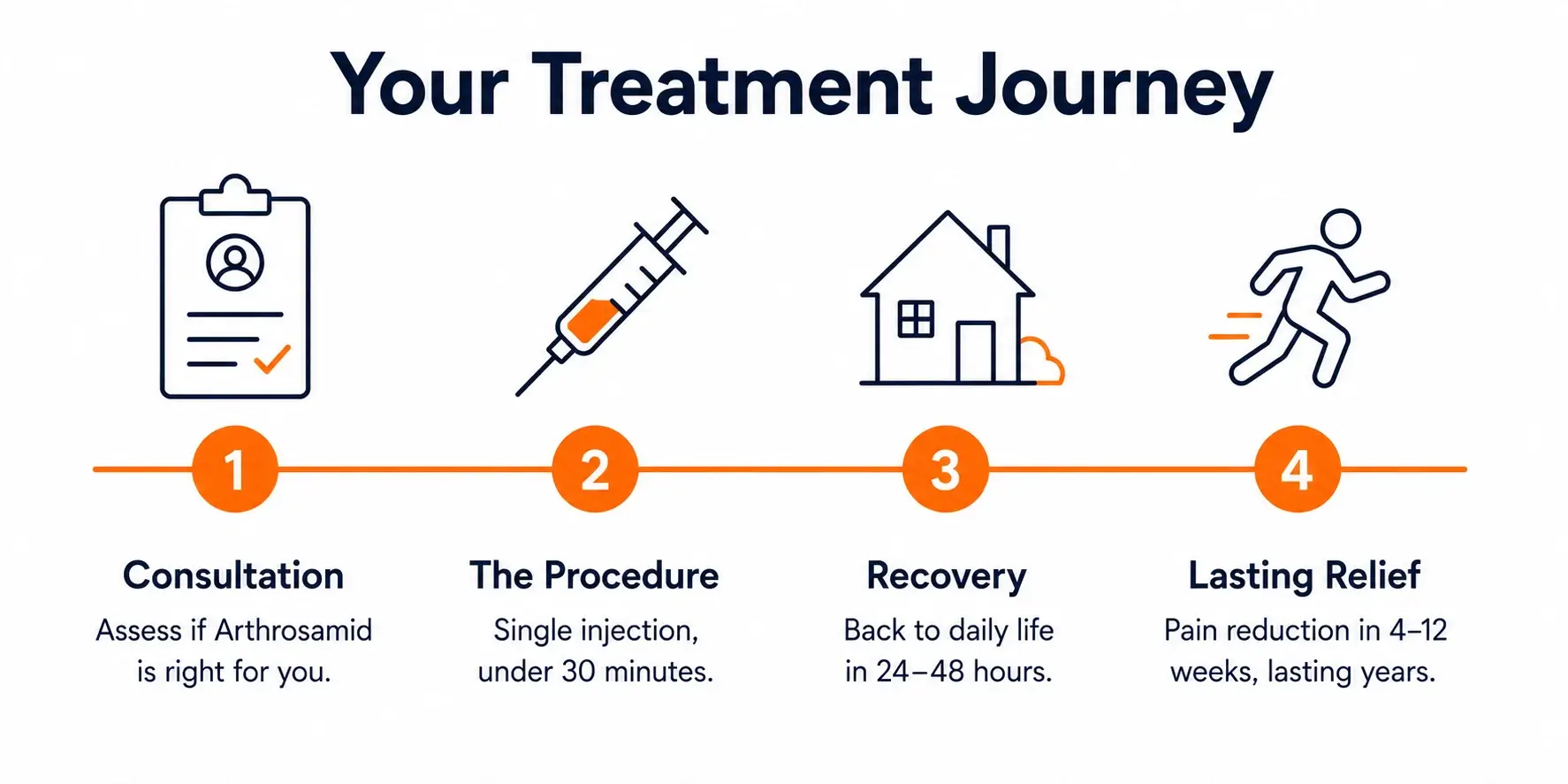
The procedure is minimally invasive and performed in an outpatient clinic:
- Preparation: Patients take a prophylactic oral antibiotic 1-2 hours before the procedure to prevent infection.
- Anesthetic & Aspiration: Local anesthetic is applied to numb the area. Any excess fluid (effusion) is drained from the knee.
- Injection: A physician uses real-time ultrasound guidance to precisely deliver a single 6 ml dose of the hydrogel directly into the intra-articular space.
- Recovery: The needle is removed, a bandage is applied, and the patient can usually go home within 15 minutes.
Our Arthrosamid Expert

Dr. Joseph Menna, MD, FRCSC
Orthopaedic Surgeon
Does Arthrosamid® injection hurt?
The injection itself causes minimal discomfort. Because a local anesthetic is used to numb the tissue beforehand, most patients only feel a mild pressure. Following the procedure, it is common to experience transient soreness, mild stiffness, or swelling for 48–72 hours as the knee adjusts to the new volume.
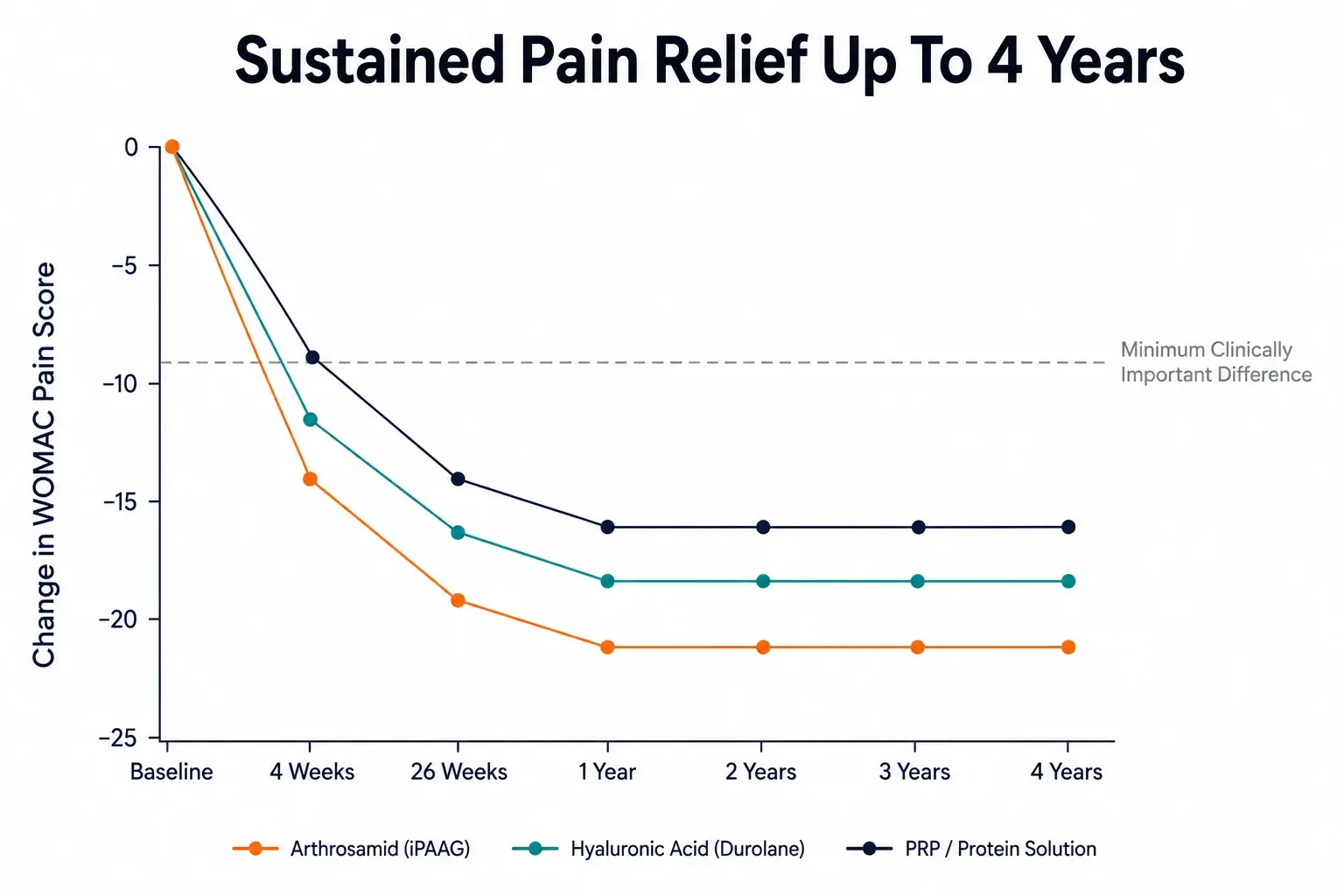
Arthrosamid® compared to Cortisone, Hyaluronic acid (Durolane), Protein solution, Nstride
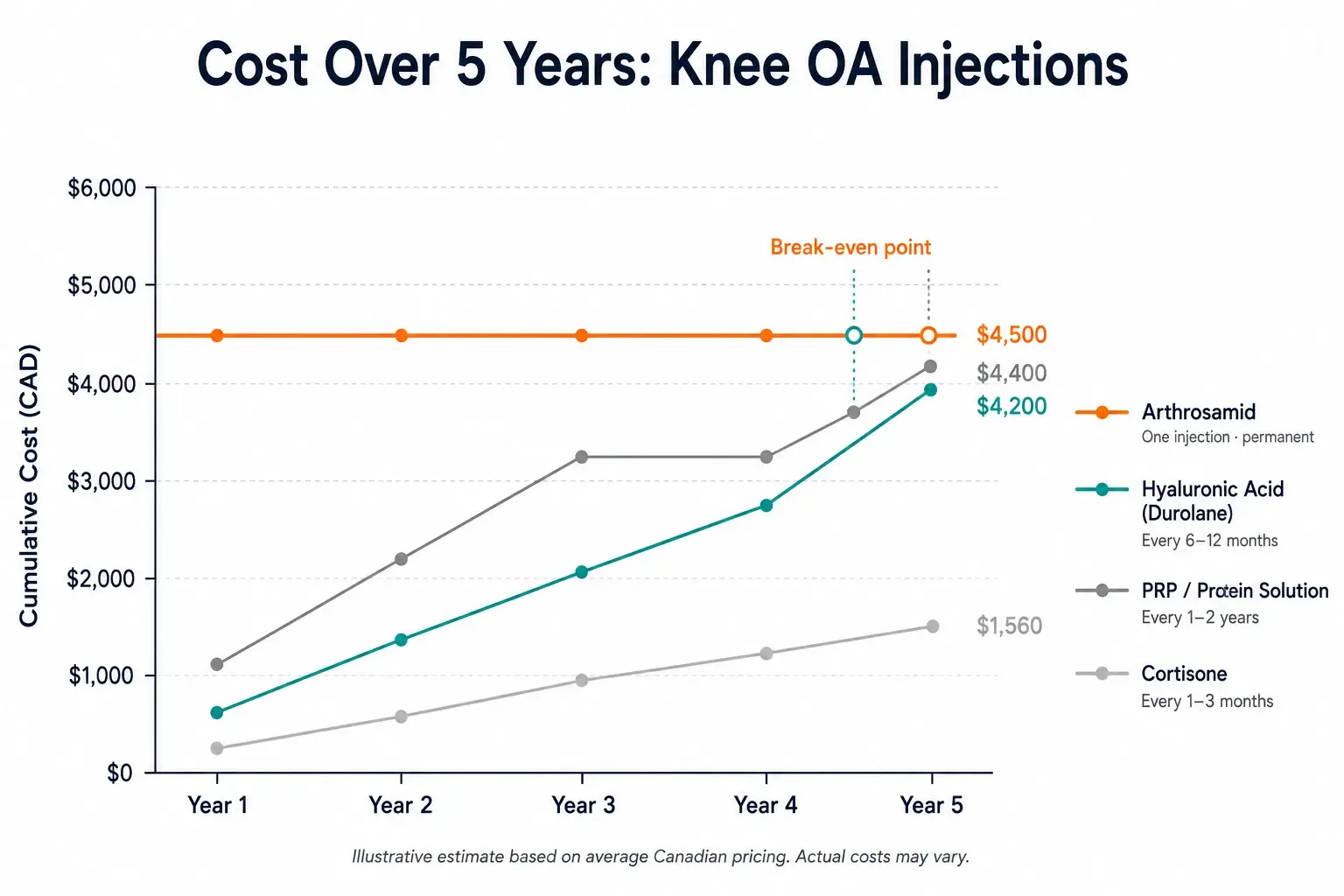
- Cortisone (Steroids): Offers rapid but temporary anti-inflammatory relief lasting only weeks to a few months. Repeated use can actively degrade joint cartilage over time. Arthrosamid® is permanent and does not break down cartilage.
- Hyaluronic Acid (e.g., Durolane): Acts as a temporary biological lubricant that naturally degrades and is absorbed by the body within 6–12 months, requiring repeat visits. Arthrosamid® is structurally stable and does not biodegrade.
- Protein Solutions (e.g., PRP/nSTRIDE): Rely on the body’s own biological healing properties to reduce inflammation, which can yield unpredictable results. Arthrosamid® provides guaranteed, immediate physical cushioning and structural support.
nSTRIDE® vs Arthrosamid®: What Is the Difference?
nSTRIDE® and Arthrosamid® are both single-injection approaches used for knee osteoarthritis, but they are fundamentally different treatments.
Arthrosamid® is a synthetic, non-biodegradable hydrogel made from 97.5% water and 2.5% cross-linked polyacrylamide. It remains in the joint and integrates with the synovial tissue.
nSTRIDE® APS is an autologous protein solution prepared from the patient’s own blood. Blood is processed to concentrate cells, platelets, anti-inflammatory cytokines and other proteins before the resulting solution is injected into the knee.
The clinical evidence for nSTRIDE® is mixed. One randomized study found greater improvement in WOMAC pain at 12 months compared with saline, while another randomized placebo-controlled trial published in 2024 found no significant difference in WOMAC or KOOS outcomes.
There is currently insufficient head-to-head evidence to state that nSTRIDE® or Arthrosamid® is universally superior. Treatment selection should consider the severity and characteristics of the osteoarthritis, previous treatments, medical history, treatment goals, cost, and physician assessment.
Arthrosamid® vs Steroid Injection
Arthrosamid® and corticosteroid injections treat knee osteoarthritis in very different ways.
Corticosteroid injections primarily reduce inflammation and tend to work relatively quickly. Their benefit is usually short term; osteoarthritis guidelines describe corticosteroid injections as an option for acute and short-term pain relief.
Arthrosamid® is a non-biodegradable hydrogel implant rather than an anti-inflammatory steroid medication. Its effect generally develops more gradually, but clinical studies have reported sustained improvements after a single injection for several years in some patients. A published five-year extension study reported statistically significant improvements in pain, stiffness and function at five years, although only 27 of the original 49 participants completed the five-year assessment.
Repeated corticosteroid treatment also deserves a more nuanced discussion than simply saying steroids “damage cartilage.” In one randomized trial, patients receiving triamcinolone injections every three months for two years experienced greater cartilage loss than patients receiving saline, without a significant long-term pain advantage. That finding relates to repeated injections on that schedule and does not mean that a single corticosteroid injection inevitably damages cartilage.
A randomized clinical trial directly comparing Arthrosamid® with steroid injections began in 2026 and is scheduled to follow participants through 2027, so higher-quality direct comparison evidence is still developing.
What Improvements Does Arthrosamid® Actually Deliver?
- Pain Reduction: Clinically proven to significantly lower pain signals and exceed the minimum clinically important difference (MCID).
- Increased Elasticity: Increases synovial tissue elasticity by roughly 15%.
- Improved Mobility: Decreases joint stiffness, allowing for smoother gliding and a return to daily activities.
- Disease Modification: Lowers pro-inflammatory mediators inside the joint, altering the environment that drives osteoarthritis pain.
How long does Arthrosamid® take to work?
While some patients feel structural relief immediately, the biological integration process takes time. Noticeable pain reduction typically begins within 2 to 4 weeks, with the maximum clinical benefit building progressively over 3 to 6 months as the gel fully settles into the synovium.
How long does the Arthrosamid® injection effect last?
Because it is a non-absorbable, non-biodegradable implant, Arthrosamid® is essentially permanent. Clinical studies confirm that the statistically significant pain reduction and functional improvements are maintained for up to 5 years from a single injection, with observational data showing ongoing benefits beyond a decade.
What are the potential side effects of Arthrosamid® injection?
Side effects are generally mild, highly localized, and resolve on their own within a few days:
- Mild swelling or joint effusion
- Warmth around the knee
- Transient stiffness or a feeling of “fullness” in the joint
- Minor injection site irritation
Does Arthrosamid® Work for Bone-on-Bone Knee Osteoarthritis?
Arthrosamid® may be considered for some patients with advanced or “bone-on-bone” knee osteoarthritis, but the results are less predictable than the phrase “works for bone-on-bone” may suggest.
“Bone-on-bone” generally describes severe loss of joint space and cartilage, often corresponding to Kellgren-Lawrence grade 4 osteoarthritis. Clinical studies of injectable polyacrylamide hydrogel have included patients with grade 4 knee osteoarthritis. A five-year Arthrosamid® study included patients with Kellgren-Lawrence grades 2–4, while a 2026 study specifically examining grade 3–4 osteoarthritis reported improvements in pain and WOMAC scores following polyacrylamide hydrogel treatment.
However, Arthrosamid® does not regrow lost cartilage or reverse bone-on-bone arthritis. Its role is to help reduce osteoarthritis symptoms by becoming integrated into the synovial tissue of the knee. Patients with end-stage arthritis, major deformity, severe loss of function, or persistent pain should therefore have an orthopedic assessment to determine whether an injection or knee replacement is the more appropriate option.
Can Arthrosamid® Be Used on the Hips?
Arthrosamid® is currently intended and licensed for the symptomatic treatment of adult patients with knee osteoarthritis. Its established indication is therefore the knee, not the hip.
Arthrosamid® should not be presented as a routinely approved treatment for hip osteoarthritis. Using polyacrylamide hydrogel in another joint would require separate consideration of the available evidence, regulatory status and individual clinical circumstances.
Patients with hip osteoarthritis should instead be assessed to determine which established non-surgical or surgical treatment options are appropriate for the severity and cause of their symptoms.
Is Arthrosamid® Covered by Insurance?
Arthrosamid® is currently commonly paid for out of pocket in Canada, although coverage depends on the individual insurance policy.
Most private insurance plans do not yet routinely reimburse Arthrosamid®, but some clinics may have coverage through medical-device benefits, procedure benefits, or a Health Spending Account.
Before treatment, patients should contact their insurance provider and ask whether an Arthrosamid® knee injection, injectable medical device, or associated procedure is eligible for reimbursement. Where available, requesting written pre-authorization or a predetermination of benefits can help clarify your potential out-of-pocket cost.
Why choose Push Pounds?
Push Pounds Sports Medicine in Toronto provides an elite standard of care for joint preservation. Choosing Push Pounds ensures:
- Precision Delivery: Injections are performed by specialized sports medicine physicians using advanced, real-time ultrasound guidance for exact intra-articular placement.
- Comprehensive Assessment: You receive a thorough clinical evaluation to confirm you are an ideal candidate, maximizing your chances of a successful outcome.
- Holistic Recovery: As a multidisciplinary clinic, Push Pounds integrates the injection with robust physical performance tracking and rehabilitation support to restore your knee’s complete biomechanical function.